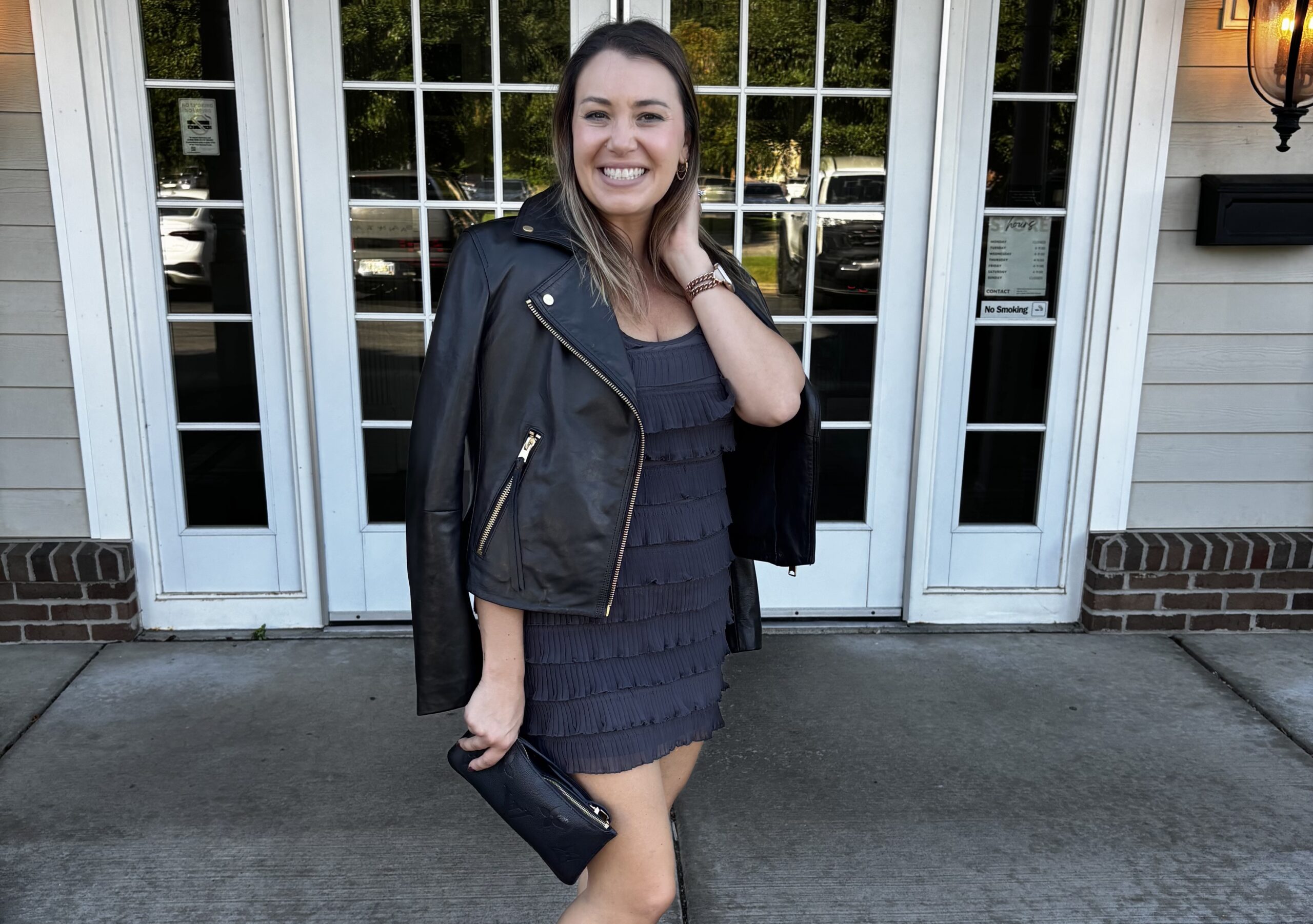
Finding your personal style after 40 isn’t about dressing for your age. Here’s how to build a wardrobe that fits your life and feels like you.
There’s something about approaching 40 that makes you reevaluate things.
Not necessarily in some dramatic, burn-your-whole-life-down kind of way. But you start paying closer attention to what fits—and I don’t just mean your jeans.
What fits your life now?
What still feels like you?
What have you been holding onto simply because it belonged to an earlier version of yourself?
I’ve been asking myself a lot of those questions lately, and unsurprisingly, they’ve made their way into my closet.
My relationship with fashion has changed so much throughout my life. I went to school for fashion. I lived in New York City. I built a career, became a mom, worked in corporate environments, worked from home, became a content creator, and spent years dressing for all of those different versions of myself.
And now I’m approaching 40.
For the first time in a long time, I don’t feel like I’m trying to figure out how I’m supposed to dress.
I’m trying to figure out what feels the most like me.
And I think there’s a big difference.
So if you’ve reached a point where your closet feels a little disconnected from the woman you’ve become, maybe you don’t need an entirely new wardrobe.
Maybe it’s simply time to rediscover your personal style.
First, Let’s Stop Asking How Women Over 40 Are Supposed to Dress
Can we retire this question?
Search the internet for fashion after 40 and you’ll inevitably find advice about what women of a certain age should and shouldn’t wear.
I’m not interested in any of that.
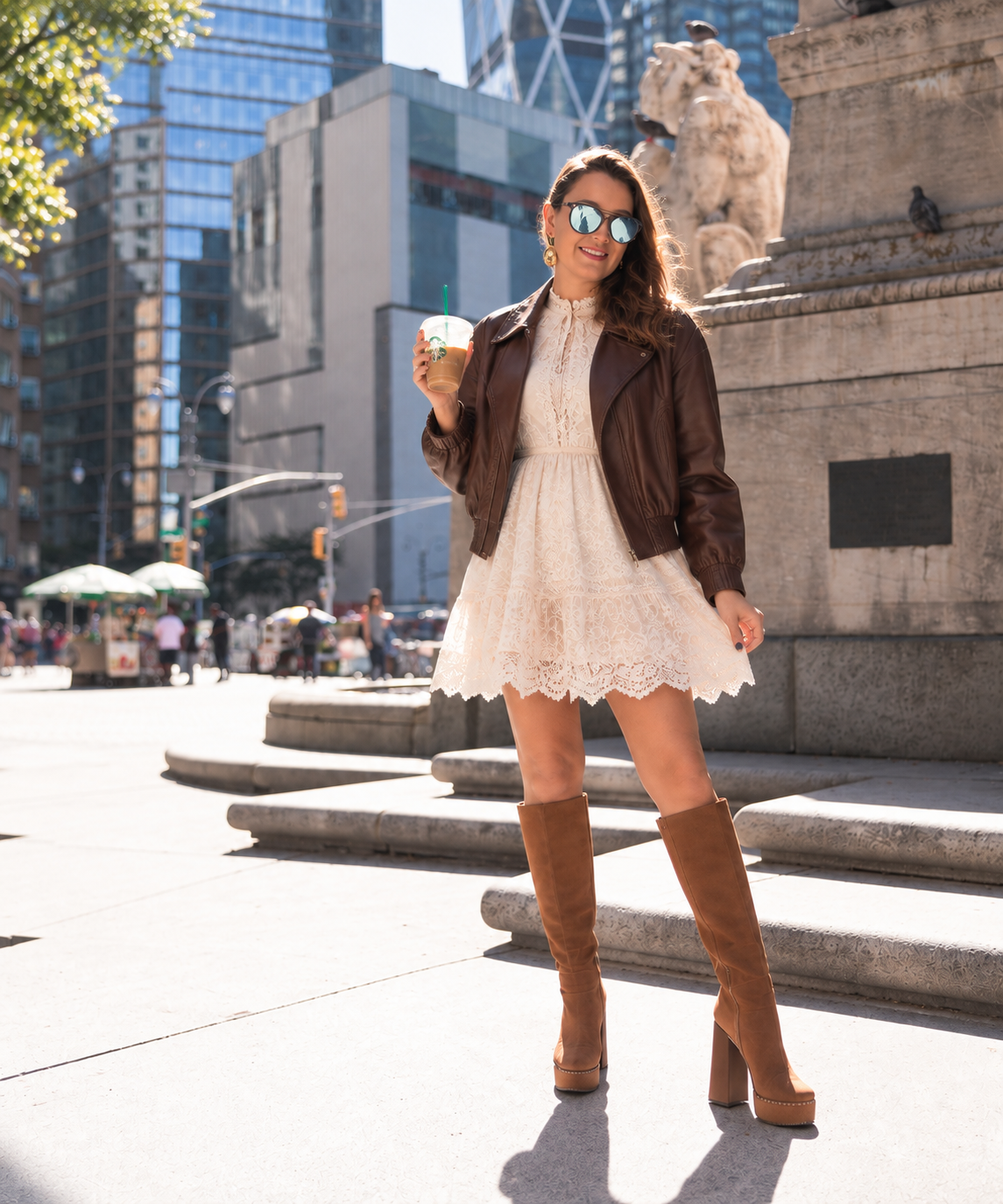
I don’t think turning 40 suddenly makes a mini skirt inappropriate. I don’t think you have to trade trends for sensible basics. And I’m certainly not planning to stop wearing a great pair of heels because I’ve crossed some imaginary age threshold.
What has changed is that I’m much more selective.
At this stage of my life, I’m less interested in wearing something simply because everyone else is wearing it.
I want to know:
Do I actually love this?
That’s a much better question than, Am I too old for this?
1. Start With Your Closet, Not the Store
When you feel like your style has changed, the temptation is to shop.
Don’t.
At least not yet.
Before buying anything, spend some time looking at what you already own.
And I don’t mean immediately starting a giant closet clean-out and throwing half of it into donation bags.
Actually look.
What pieces do you reach for over and over?
What haven’t you worn in two years?
What still fits but somehow doesn’t feel like you anymore?
What do you put on and immediately feel more confident?
Your closet contains a surprising amount of information about your personal style if you stop looking at individual garments and start looking for patterns.
RELATED: How to Go Shopping In Your Own Closet
2. Pay Attention to the Outfits That Make You Feel Like Yourself
This sounds incredibly simple, but I think we sometimes forget to do it.
Think about the last few outfits you wore that made you feel really good.
Not necessarily the outfits that received the most compliments.
The ones that made you feel good.
Take pictures of them.
I have become a huge believer in keeping photos of outfits that work. Create an album on your phone and use it as your own personal style archive.
After a while, patterns start emerging.
Maybe you consistently love a defined waist.
Maybe you gravitate toward oversized button-downs.
Maybe you feel incredible in monochromatic outfits.
Maybe it’s always the shoes that make the outfit for you.
Those patterns are your personal style talking.
3. Choose Three Words to Describe Your Style
This is one of my favorite exercises because it forces you to get specific.
Choose three words that describe how you want your clothes to feel.
Not necessarily how they look.
Maybe yours are:
Polished. Feminine. Unexpected.
Or:
Classic. Relaxed. Modern.
Or:
Edgy. Minimal. Sophisticated.
Your words don’t need to fit neatly into some established fashion aesthetic.
They’re simply a filter.
The next time you’re considering buying something, ask yourself whether it fits at least two of your three words.
Suddenly that viral sweater everyone is buying becomes much easier to leave behind if it has absolutely nothing to do with the style you’re trying to create.
4. Separate Trends You Love From Trends You’re Consuming
This one has become increasingly important in the age of Instagram and TikTok.
There is a huge difference between:
I love that.
and
I’ve seen that 37 times this week.
Sometimes we mistake familiarity for personal preference.
I love fashion trends. I will always love fashion trends.
But I don’t need to participate in every single one.
The goal isn’t to stop wearing trends after 40. It’s actually the opposite.
Wear the ones you genuinely love.
Skip the rest.
That’s personal style.
5. Figure Out Your Outfit Formulas
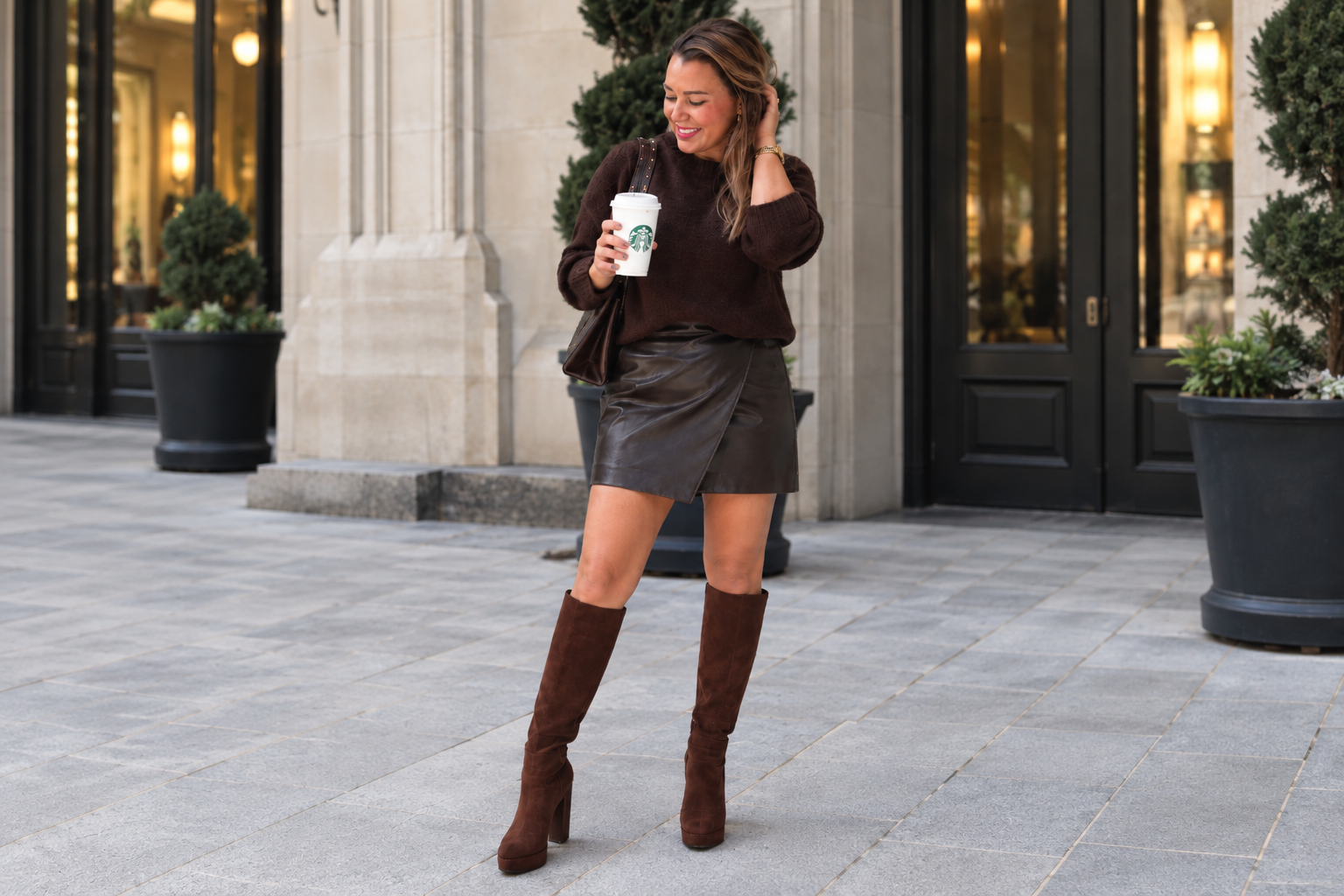
One of the biggest changes I’m making to my wardrobe right now is thinking in terms of outfit formulas instead of individual outfits.
Especially as I transition back into an office environment, I don’t want to reinvent the wheel every morning.
I want combinations that I already know work.
Maybe yours is:
Wide-leg trousers + fitted knit + pointed-toe shoe.
Or:
Jeans + white tee + blazer + great bag.
Or:
Dress + knee-high boots + statement jewelry.
Once you identify a few combinations that consistently make you feel good, getting dressed becomes infinitely easier.
RELATED: 10 Easy Outfit Formulas for Busy Working Moms Who Still Want to Look Chic
6. Your Wardrobe Should Match the Life You’re Actually Living
This might be the biggest lesson for me right now.
Our closets have a funny way of holding onto old versions of our lives.
You might have clothes from an office you haven’t worked in for five years.
A collection of going-out tops from a social life that looks completely different now.
Things from when your kids were babies.
Things from before kids.
Things you bought for the person you thought you were going to become.
But your wardrobe isn’t a museum.
It needs to work for the life you’re living right now.
My life is changing again. I’m heading back into an office, which means I’m suddenly thinking about trousers, button-downs, loafers and work bags in a way I haven’t needed to for a while.
But I don’t want to create an entirely separate “work Allison.”
I want those pieces to still feel like me.
That’s the difference.
7. Decide Where You Actually Want to Invest
I’ve talked more openly lately about why I buy designer pieces, and I think understanding your personal style makes investing in fashion much easier.
Because you stop buying expensive things simply because they’re expensive.
You know which categories matter to you.
For me, shoes and handbags have always held a special place in my wardrobe.
I love the craftsmanship. I research purchases. I save for them. I take care of them. I repair things. And I love the idea of eventually passing certain pieces down to my daughter.
Someone else might not care about handbags at all but will happily invest in a beautiful coat.
Or denim.
Or jewelry.
There isn’t one correct category to spend money on.
Figure out what you value.
8. Learn How to Mix High and Low
Some of my favorite outfits combine something incredibly affordable with something I’ve owned and loved for years.
An H&M dress with a Louis Vuitton clutch.
Affordable trousers with Christian Louboutin pumps.
A basic tee underneath a beautiful jacket.
I actually think mixing price points makes an outfit much more interesting.
Personal style isn’t about proving how much something cost.
It’s about knowing how to put things together.
And when you know your style, an inexpensive piece doesn’t suddenly look out of place next to an investment piece.
It all belongs because you are the common denominator.
9. Stop Saving Your Favorite Things
This is something I’m actively working on.
Wear the bag.
Wear the shoes.
Put on the dress.
We have a tendency to designate certain things as being too special for everyday life, and then they spend most of their existence sitting beautifully inside our closets.
I’m increasingly interested in actually enjoying the things I own.
That doesn’t mean I’m wearing Louboutins to run to Target.
But I’m also not waiting for some imaginary perfect occasion to wear the things that make me happy.
Life is the occasion.
10. Give Yourself Permission to Change Again
Finding your personal style at 40 doesn’t mean you’ve finally cracked some code and now have to dress this way forever.
I hope I’m dressing differently at 50.
And 60.
And 70.
Not because there will suddenly be things I’m “too old” to wear, but because I hope I’m still changing.
Personal style isn’t static because we aren’t static.
Our bodies change.
Our careers change.
Our families change.
Our priorities change.
Our confidence changes.
Our lives change.
Your wardrobe gets to change with you.
Maybe Finding Your Style Isn’t About Finding It at All
I started thinking about personal style because I’m approaching 40 and entering another new chapter of my life.
But the more I’ve thought about it, the more I’ve realized that I don’t think I’m trying to find my personal style.
I’m giving myself permission to come back to it.
Fashion was one of my first loves.
It has been part of my education, my career, my creativity and this little corner of the internet for years.
And somewhere among motherhood, careers, schedules and all the other things that come with building a life, it became really easy to put that part of myself a little further down the list.
Not anymore.
I’m wearing the shoes.
I’m carrying the bag.
I’m experimenting again.
I’m getting dressed just because it makes me happy.
And I’m caring a whole lot less about whether a woman approaching 40 is “supposed” to wear any of it.
Because maybe personal style after 40 isn’t about finally figuring out the rules.
Maybe it’s realizing you don’t need them.


