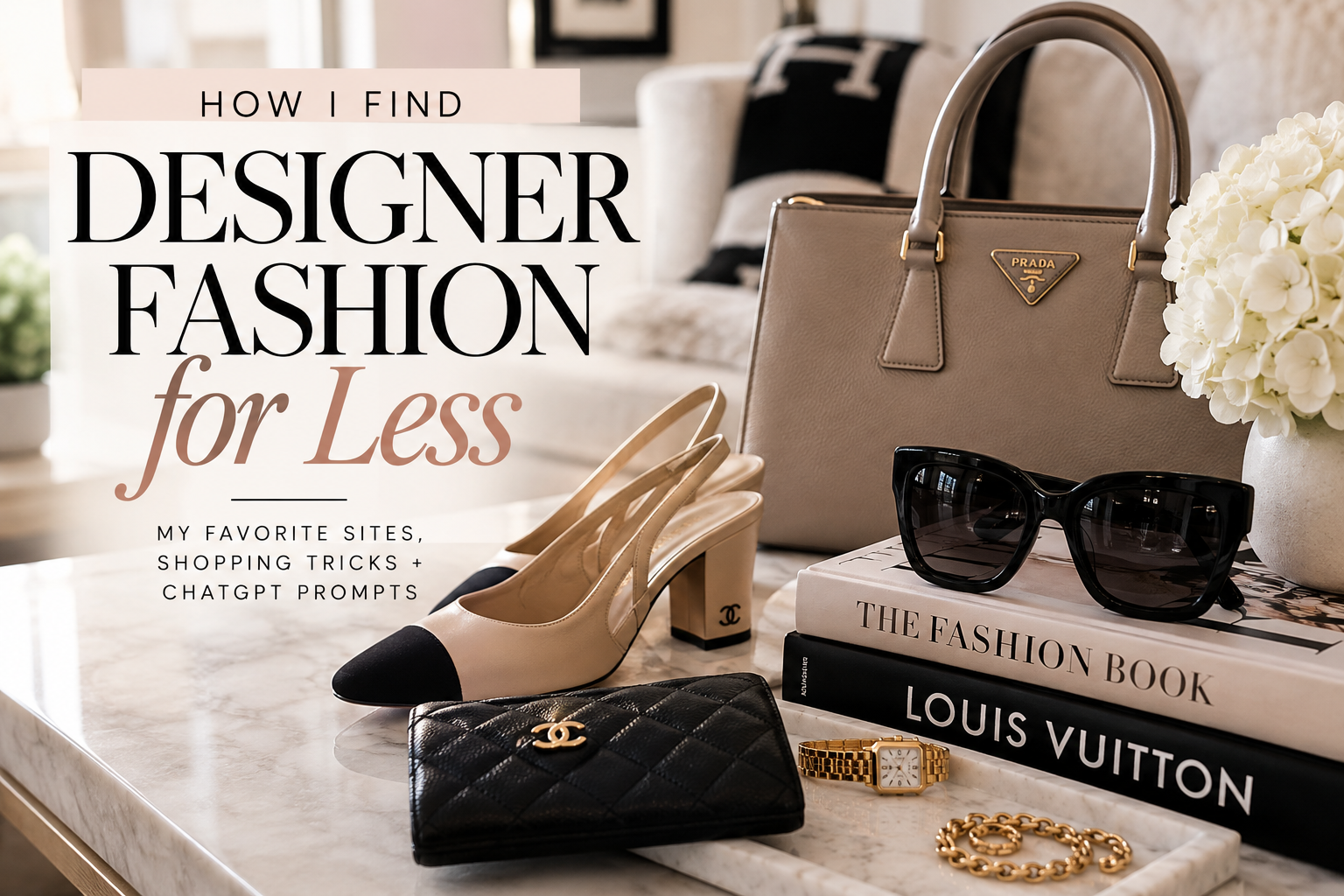
Discover how I find designer fashion for less using The RealReal, ThredUp, Gilt, luxury sales, and my favorite ChatGPT shopping prompts.
I love designer fashion. There, I said it.
But here’s something that might surprise you: I don’t love paying full price for it.
If you’ve been following Project Motherhood for a while, you already know that I’m a firm believer in buying fewer, better things. I would much rather save for one beautifully made handbag, pair of shoes, or timeless wardrobe staple that I can wear for years than continuously purchase inexpensive pieces that end up in a donation pile (or worse, a landfill) after one season.
And while I appreciate the craftsmanship, history, and quality behind luxury fashion, I also believe there’s absolutely no reason to pay full retail price if you don’t have to.
Over the years, I’ve developed a few tried-and-true strategies for finding designer fashion for less. Some involve shopping resale, some involve knowing exactly when and where to look, and one of my newest tricks involves making ChatGPT do a little of the shopping research for me.
Today, I’m sharing my favorite resources, shopping strategies, and even a few of the exact prompts you can use to find luxury pieces without the luxury price tag.
1. The RealReal: My Favorite Place for Pre-Loved Luxury
Let’s start with one of my absolute favorites: The RealReal.
If you’re unfamiliar, The RealReal is an online luxury consignment marketplace where you can shop authenticated pre-owned designer clothing, handbags, shoes, jewelry, and accessories.
And I absolutely love it.
What makes The RealReal especially appealing to me is the opportunity to find beautiful designer pieces that might otherwise be completely outside my budget.
I’m talking about brands like Saint Laurent, Gucci, Valentino Garavani, Burberry, and so many others.
My biggest tip? Don’t shop The RealReal without a plan.
I like to search for specific designers, silhouettes, and pieces I’ve already researched rather than endlessly scrolling through everything available.
And don’t automatically rule out an item because it’s from a previous season. Some of my favorite designer pieces are older styles that still look just as beautiful today.
My shopping tips:
- Search by designer and category instead of browsing aimlessly.
- Pay close attention to condition descriptions and photographs.
- Know your measurements, especially for designer clothing.
- Compare the resale price with the item’s original retail price and other current listings.
- Factor in shipping, return restrictions, and potential repair costs.
And remember, while resale platforms have authentication processes, no process is completely foolproof. Always do your own research when making an expensive purchase.
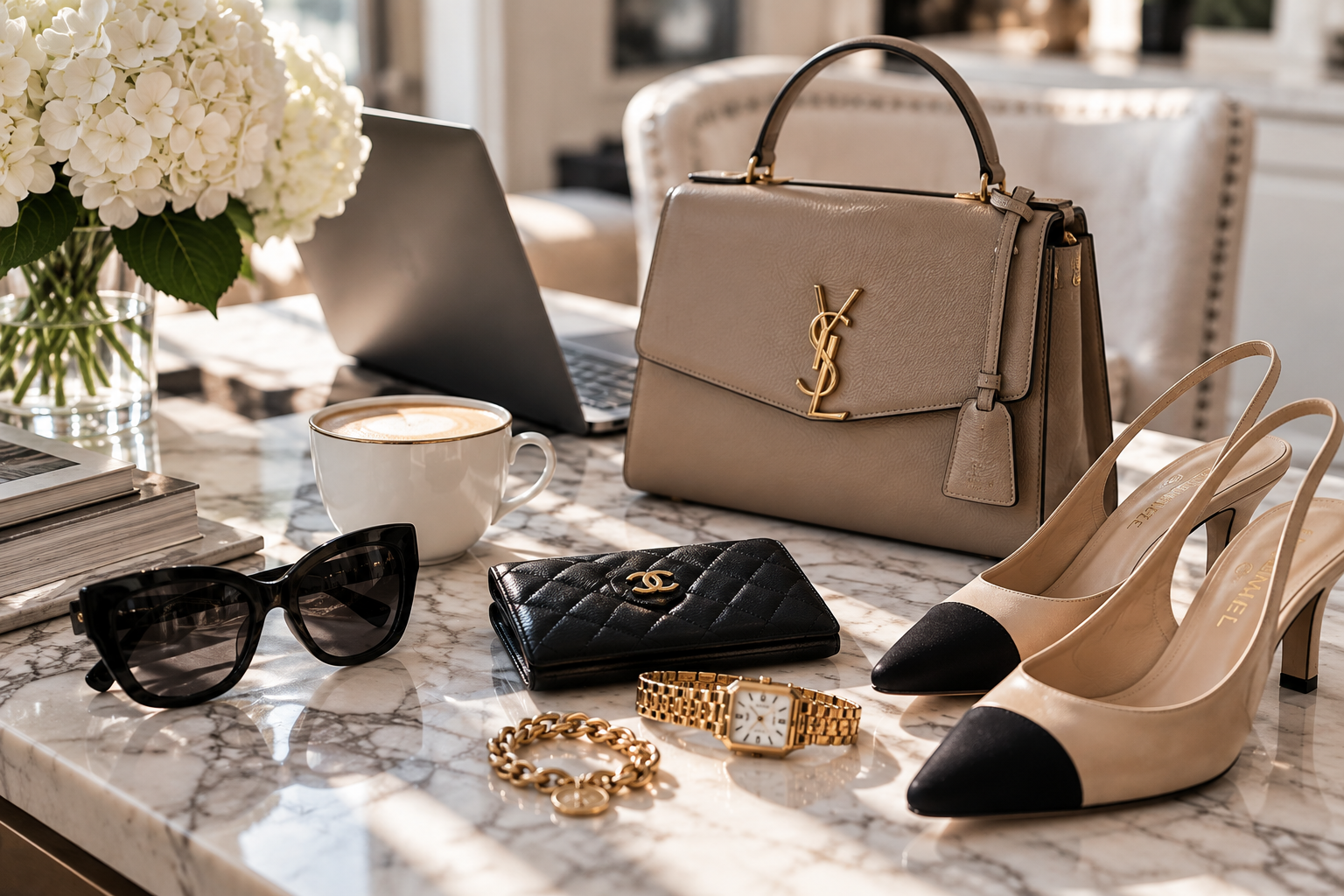
I recently purchased a pair of St. Laurent heels that I found on The RealReal last month that were new with tags and 65% off compared to the current price. Yes, these beauties are currently sitting on luxury store shelves everywhere at full price, but they were mine for a fraction of the cost. Check out my video below.
2. ThredUp: Don’t Overlook Designer Finds
ThredUp is another resale website that deserves a place in your shopping rotation.
While it’s not exclusively dedicated to luxury fashion, that’s actually part of its appeal.
You can find everything from everyday contemporary brands to designer clothing, often at prices significantly below I original retail.
I especially love the idea of using ThredUp to search for beautiful blazers, cashmere sweaters, dresses, and other wardrobe staples.
My strategy is to search by specific brands and filter by size, condition, and category.
One thing I’ve learned about secondhand shopping is that patience matters. You might not find exactly what you’re looking for today, but that doesn’t mean it won’t appear next week.
My shopping tip: Keep a running wishlist of designers and wardrobe staples you’re looking for. That way, you’re shopping with intention instead of purchasing something simply because it’s inexpensive.
3. Gilt and Sample Sales: Where Timing Is Everything
If you’re not shopping designer sample sales, you’re missing an opportunity.
One of my favorite places to browse is Gilt, which offers limited-time sales on designer fashion, accessories, shoes, and home goods.
The appeal is simple: luxury and premium brands at reduced prices.
But there’s a catch.
You have to know what you’re looking at.
Just because something is advertised as 60% off doesn’t automatically make it a good deal.
Before purchasing, I always try to research the actual item, compare prices across retailers, and determine whether it’s something I would genuinely want at a higher price.
Sample sales can also be a fantastic way to score designer fashion for less. These events may include past-season merchandise, excess inventory, and occasionally samples.
If you live near a major city or travel frequently, it’s worth looking into local sample sales, too.
My shopping tips:
- Sign up for notifications from your favorite sale websites.
- Research the item before getting distracted by the discount.
- Review final-sale policies carefully.
- Know your designer sizing in advance.
- Don’t buy something simply because the price looks incredible.
4. Nordstrom Rack and Designer Clearance Sections
Here’s something I think more people should be doing: checking the clearance sections of retailers they already love.
Nordstrom Rack is one of my favorite places to look for discounted shoes, handbags, and clothing.
But I also regularly recommend checking the sale sections of department stores and designer retailers.
Sometimes the best deal isn’t hiding on a resale website. It’s sitting in the clearance section of a retailer you’ve shopped for years.
The trick is knowing exactly what you’re looking for.
For example, if I’ve fallen in love with a particular pair of designer shoes, I’ll search the exact style name across multiple retailers before deciding where to purchase.
And I always check whether there are additional promotions available.
My shopping tip: Don’t forget to compare the final checkout price, including shipping and any applicable discounts. The advertised sale price doesn’t always tell the whole story.
5. My Favorite Shopping Trick: Using ChatGPT to Find Designer Deals
Now let’s talk about one of my favorite newer shopping strategies.
I use ChatGPT as my personal designer-fashion shopping assistant.
Seriously.
Instead of spending an entire afternoon opening twenty browser tabs trying to find a particular pair of shoes, I can ask ChatGPT to help research retailers, identify similar styles, and compare prices.
And the more specific I am, the better the results tend to be.
Here’s how I use it.
Prompt #1: Find the Exact Designer Item for Less
“Help me find the best current price on [designer and exact product name]. Check reputable retailers, department stores, sale sections, and resale websites. Include links, prices, available sizes, and whether the item is new or pre-owned. Don’t include listings that cannot be verified.”
This is especially useful when I already know exactly what I want.
Prompt #2: Find a Designer Look for Less
“I love the look of [designer item or product link], but I don’t want to pay the full retail price. Find five similar options at lower price points. Focus on quality materials, comparable silhouettes, and reputable brands. Include shopping links and explain how each option compares to the original.”
This is one of my favorite ways to find alternatives without sacrificing the overall look I’m trying to achieve.
Prompt #3: Search Luxury Resale Websites
“I’m looking for a pre-owned [designer item] in [size, color, and preferred condition]. Help me search reputable luxury resale websites, compare available listings, and identify the best value. Include any important details about condition, authenticity policies, and return restrictions.”
Because sometimes the best way to get the designer item you love is to buy it secondhand.
Prompt #4: Compare Prices Before Buying
“I’m considering purchasing [exact item]. Compare its current prices across reputable retailers and resale platforms. Tell me whether the listed discount appears competitive, and identify any additional costs or return restrictions I should consider.”
A little research before making an expensive purchase can go a long way.
Prompt #5: Build a Designer Wishlist on a Budget
“I want to slowly build a timeless designer wardrobe. My budget is [$ amount], and I prefer [describe personal style]. Recommend five investment-worthy pieces to prioritize, explain why each deserves a place in my wardrobe, and suggest where I might find them for less.”
I love this approach because it encourages intentional shopping instead of impulse purchases.
One important reminder: AI shopping results aren’t always current or accurate. I always open the actual retailer listing to verify pricing, stock, sizing, authenticity information, and return policies before buying anything.
6. Know When to Buy and When to Walk Away
One of the biggest lessons I’ve learned over the years is that a discount doesn’t automatically make something worth purchasing.
A $1,200 handbag marked down to $600 is still a $600 handbag.
And if it doesn’t fit your lifestyle, work with your wardrobe, or genuinely make you happy, it isn’t a bargain.
Before purchasing something expensive, I ask myself a few questions:
- Will I still love this five years from now?
- Can I style it multiple ways with things I already own?
- Is the quality worth the price?
- Can it be maintained, repaired, or restored?
- Am I buying it because I love it or because it’s on sale?
Sometimes the smartest shopping decision is walking away.
And sometimes it’s waiting six months until that beautiful piece you’ve been dreaming about finally goes on sale.
7. Remember That Luxury Should Be Loved, Worn, and Lived In
Here’s where my philosophy on designer fashion really comes into play.
I don’t purchase designer pieces to keep them sitting in their dust bags.
I purchase them because I love fashion, appreciate beautiful craftsmanship, and want to build a wardrobe filled with things that have meaning.
Some of my favorite accessories have been part of my life for years. I’ve even shared the story of restoring my beloved Burberry bag, a piece with sentimental value that I wasn’t ready to give up on.
That’s the kind of relationship I want to have with the things I own.
I want to wear them, care for them, repair them when necessary, and hopefully pass some of them down to my daughter one day.
And if I can save money along the way? Even better.
Final Thoughts: Buy Less, Choose Better, and Shop Smarter
I don’t believe loving designer fashion and being financially thoughtful have to be mutually exclusive.
You can appreciate luxury without paying full price.
You can love beautiful things without constantly purchasing new ones.
And you can build a wardrobe that feels special, personal, and timeless without chasing every trend.
For me, finding designer fashion for less isn’t just about scoring an incredible deal.
It’s about shopping with intention, knowing what I love, and making thoughtful purchases that I’ll enjoy for years to come.
Because the best fashion investment isn’t necessarily the most expensive piece in your closet.
It’s the one you reach for again and again.
Happy shopping!
This post may contain affiliate links, which means I may earn a small commission from qualifying purchases at no additional cost to you.