
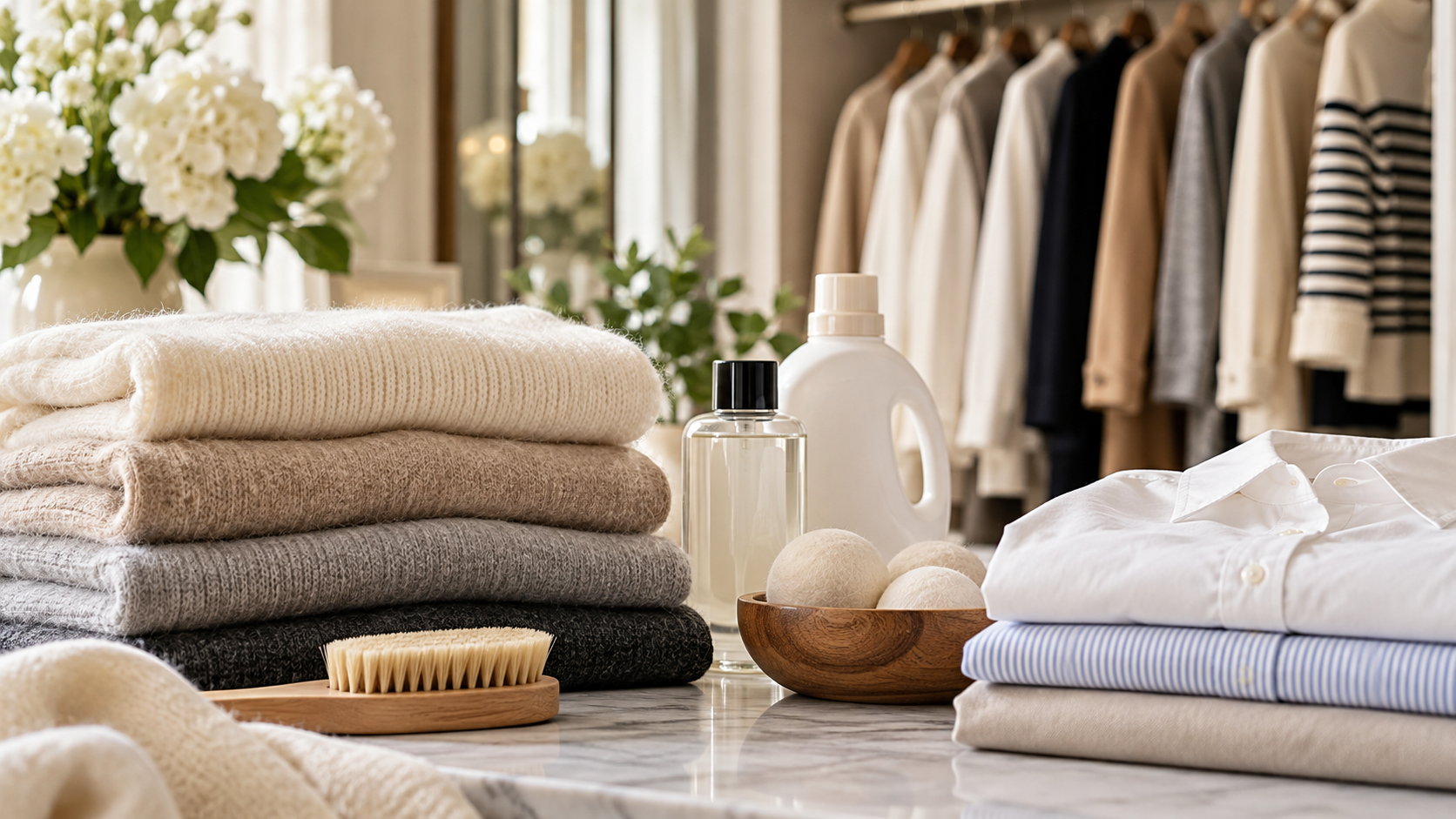
I’ve always believed that taking care of your clothes is one of the simplest ways to feel more put together, get more wear out of what you already own, and ultimately save money. When you invest in pieces you love—whether it’s a cashmere sweater, a tailored coat, or a great pair of jeans—you want them to last.
One of the things I talk about frequently here on Project Motherhood is choosing quality over quantity. I’m much more interested in building a wardrobe of beautiful, timeless pieces that I can wear for years than constantly replacing inexpensive clothing that doesn’t hold up.
But here’s something we don’t talk about enough: buying quality clothing is only half the equation. Knowing how to properly care for those pieces is just as important.
Over the years, I’ve learned (sometimes the hard way) that a little extra care goes a long way. From stretching out sweaters to navigating confusing care labels, these are the practical tips and habits that have helped me keep my wardrobe looking its best.
Why Clothing Care Matters
Taking care of your clothes isn’t just about making them last longer, although that’s certainly a huge benefit.
It also helps you:
- Keep your clothing looking polished and well-maintained.
- Preserve the shape, color, and quality of your favorite pieces.
- Save money by reducing the need to replace items.
- Build a more sustainable and intentional wardrobe.
- Get more value out of the clothing you’ve already invested in.
I firmly believe that beautiful clothes are meant to be worn, not saved for some imaginary special occasion. And when you take care of them properly, you can enjoy wearing them that much longer.
Understanding Your Fabrics
One of the biggest lessons I’ve learned is that not all fabrics should be treated the same way.
A cashmere sweater requires an entirely different approach than your favorite cotton T-shirt, and something that works beautifully on denim could potentially ruin a delicate silk blouse.
Here’s a quick breakdown of some common fabrics and how to care for them.
Cashmere
Cashmere is one of my favorite fabrics, but it definitely requires some extra attention. Wash it only when necessary, use a detergent formulated for wool or cashmere, and always lay it flat to dry. Proper storage is equally important because hanging cashmere can cause it to lose its shape.
Wool
Wool is naturally resilient and often doesn’t need to be washed after every wear. Spot cleaning and airing it out can help extend the time between washes. Depending on the garment’s care label, hand washing or professional cleaning may be appropriate. Avoid excessive heat, which can cause shrinking.
Silk
Silk is beautiful but delicate. Some silk garments can be hand washed using a gentle detergent, while others require professional cleaning. Always check the care label first, avoid harsh stain treatments, and keep silk away from excessive heat and direct sunlight while drying.
Cotton
Cotton is generally easier to care for, but that doesn’t mean it’s indestructible. Washing in cool water when appropriate and turning darker garments inside out can help preserve color and prevent unnecessary wear.
Denim
Your jeans probably don’t need to be washed nearly as often as you think. Washing less frequently, using cold water, and air drying can help maintain their color and fit.
Linen
Linen is one of those fabrics that looks beautiful even when it isn’t perfectly pressed. Wash according to the care label, avoid excessive heat, and embrace its natural texture. A steamer can be a great alternative to ironing.
Synthetic Fabrics
Polyester, nylon, and other synthetic materials can be durable, but they aren’t immune to damage. Check care labels, use gentle washing cycles when appropriate, and avoid high dryer temperatures that can affect the fabric’s texture and elasticity.
My biggest tip? Never assume that two garments made from the same fabric should be cared for identically. Construction, dyes, trims, and fabric blends can all affect the proper cleaning method.
My 10 Best Tips for Making Your Clothes Last Longer
1. Wash Your Clothes Less Often
This might sound counterintuitive, but washing your clothes too frequently can actually shorten their lifespan.
Every wash cycle creates friction that can weaken fibers, fade colors, and affect the shape of your clothing.
Of course, items like underwear, workout clothes, and anything visibly dirty should be washed regularly. But your favorite jeans, sweaters, and structured pieces often don’t need to go straight into the laundry after a single wear.
Sometimes simply airing out a garment is enough.
2. Invest in a Gentle Laundry Detergent
Not all laundry detergents are created equal.
Harsh formulas can be unnecessarily aggressive on delicate fabrics, particularly when you’re washing cashmere, silk, or other specialty materials.
I recommend keeping a gentle detergent specifically formulated for delicate fabrics on hand.
It’s a small investment that can make a meaningful difference in preserving your wardrobe.
3. Turn Your Clothes Inside Out
This is one of the easiest clothing-care habits to incorporate into your routine.
Turning garments inside out before washing can help reduce friction on the visible surface of the fabric, particularly for darker clothing, denim, and pieces with embellishments.
It takes only a few seconds and can help keep your clothing looking newer for longer.
4. Pay Attention to Water Temperature
Hot water isn’t always better.
In fact, excessive heat can contribute to shrinking, fading, and damage to certain fibers.
Cold water is often a great choice for everyday laundry because it’s gentler on many fabrics and helps preserve color.
However, always follow the garment’s care label, especially when washing items that require specific temperatures for proper cleaning.
5. Air Dry Whenever Possible
If there’s one thing that can dramatically extend the life of many garments, it’s reducing unnecessary exposure to high dryer heat.
Excessive heat can weaken elastic fibers, cause shrinkage, and affect the overall appearance of clothing.
I especially recommend air drying sweaters, delicate blouses, and pieces with stretch.
Remember to lay knitwear flat rather than hanging it while wet, which can stretch the fabric.

6. Invest in a Few Clothing-Care Tools
You don’t need an elaborate laundry room or a closet full of expensive products to keep your clothes looking beautiful.
A few practical tools can make a tremendous difference.
My favorites include:
- A fabric shaver for removing pills from sweaters.
- A gentle sweater brush for maintaining knitwear.
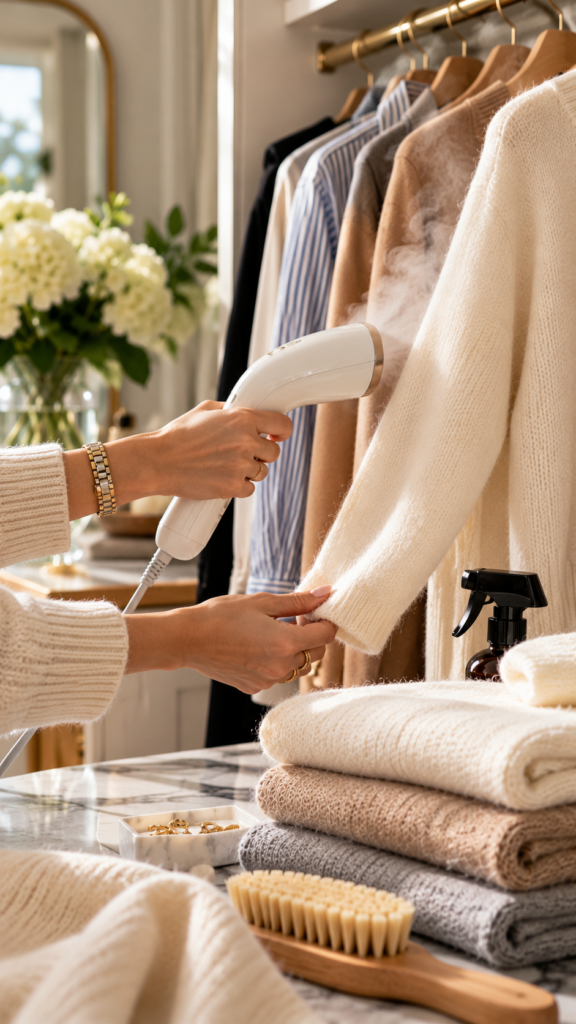
- A quality steamer for refreshing clothing.
- A lint roller for quick touch-ups.
- Mesh laundry bags for protecting delicate items.
These are relatively inexpensive investments that can help keep your wardrobe looking polished.
7. Store Your Clothes Properly
How you store your clothing matters just as much as how you wash it.
Heavy sweaters should generally be folded rather than hung to prevent stretching. Structured jackets and coats benefit from supportive hangers, while delicate garments may require padded hangers.
Seasonal clothing should be cleaned before storage and kept in a cool, dry environment.
And don’t forget to give your clothing a little breathing room. An overcrowded closet can create unnecessary wrinkles and make it difficult to properly care for your favorite pieces.
8. Treat Stains Carefully, Not Just Quickly
We’ve all been there. You spill something on your favorite shirt, immediately reach for a stain remover, and hope for the best.
But one of the biggest lessons I’ve learned is that the wrong stain treatment can sometimes cause more damage than the original stain.
Before applying any product, check both the garment’s care label and the stain remover’s instructions.
Test the product on an inconspicuous area whenever possible, especially when working with colored or delicate fabrics.
And remember that a product marketed as color-safe isn’t necessarily appropriate for every garment.
9. Be Strategic About Dry Cleaning
Dry cleaning certainly has its place, especially for tailored garments, structured pieces, and fabrics that require specialized care.
However, not every garment needs professional cleaning after every wear.
Unnecessary cleaning can be expensive and may contribute to wear over time.
Check the care label, consider whether the garment actually needs cleaning, and use a reputable professional for pieces that require special attention.
10. Give Your Clothes a Little Extra Attention
Sometimes the smallest habits make the biggest difference.
Take a few extra minutes to inspect your clothing before putting it away.
Remove lint, address loose buttons, repair small seams, and make sure everything is completely dry before storing it.
I also recommend rotating your favorite pieces rather than wearing the same garments repeatedly without giving them time to rest.
A little attention today can prevent bigger problems down the road.
A Real-Life Lesson: My Recent Aritzia Experience
I recently had a frustrating experience that reminded me just how important clothing care really is—and how even following a garment’s instructions doesn’t always guarantee the outcome you expect.
I purchased the Landmark Poplin shirt from Aritzia at full price. It was exactly the type of piece I love adding to my wardrobe: classic, versatile, and something I expected to wear for years.
After getting a small spot on the shirt, I used a stain remover to treat it.
The result was incredibly disappointing.
https://www.instagram.com/reel/De7gecxswIt/?obrf=MXZqbzJ3NGxzbmc1Yg==
The treated area became discolored, almost as though it had been bleached, despite the fact that I hadn’t used chlorine bleach. What made the experience particularly frustrating was that the garment’s care label permitted bleach when necessary.
I followed up with Aritzia to explain what happened, especially because I had purchased the shirt expecting a certain level of quality and longevity.
Unfortunately, the response I received left me disappointed.
As someone who regularly encourages women to invest in better-quality clothing, this experience raised an important question for me:
What does investing in quality really mean if a garment can’t withstand reasonable care?
I understand that fabrics have limitations and that stain removers can interact unpredictably with certain dyes and finishes.
But I also believe brands have a responsibility to provide clear, accurate care instructions so customers can confidently maintain the clothing they purchase.
The experience hasn’t changed my philosophy about investing in quality. If anything, it’s reinforced the importance of being an informed consumer.
Read care labels. Understand your fabrics. Research specialty cleaning products. And don’t assume that a higher price tag automatically guarantees durability.
Final Thoughts: Buy Less, Choose Well, and Care for What You Own
Building a beautiful wardrobe doesn’t have to mean constantly buying something new.
In fact, some of the most stylish women I know have mastered the art of wearing and rewearing pieces they truly love.
That’s the approach I’ve been embracing more and more as I get older.
I want a closet filled with clothing that fits beautifully, makes me feel confident, and stands the test of time.
And I want to enjoy those pieces rather than worrying about preserving them for an occasion that may never come.
Caring for your clothing doesn’t have to be complicated or time-consuming. A few thoughtful habits can help you get more wear out of what you already own, reduce unnecessary purchases, and keep your wardrobe looking its best.
Because ultimately, the most sustainable and stylish wardrobe isn’t necessarily the one filled with the most expensive clothes. It’s the one filled with pieces you love, wear often, and care for well.
xo,
Allison