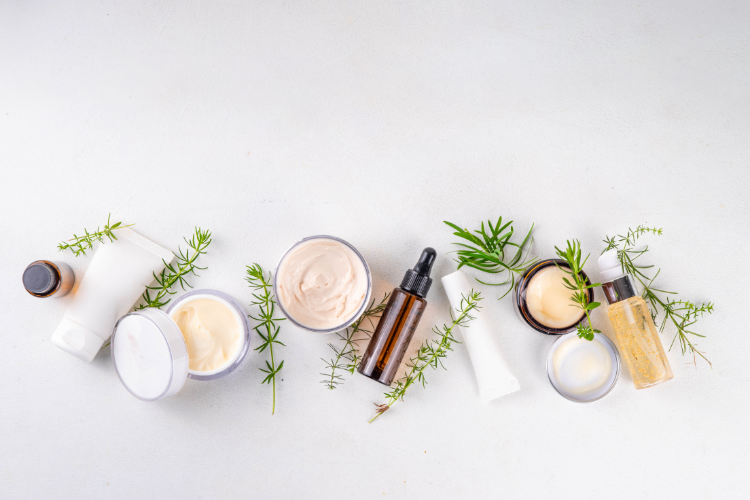
What does the latest clean beauty study mean for women? We break down the new research on BPA, parabens, and phthalates and explore what realistic, healthy product choices look like for moms.
What the Latest Clean Beauty Study Means for Women
A few weeks ago, I found myself down a rabbit hole on Instagram listening to environmental health advocate and author, Lindsay Dahl, talk about a new clean beauty study that was making waves in the wellness world.
If you have been following for a long time, you know that I have been a clean beauty advocate for a long time; however, I try not to get pulled into the “everything is toxic” side of the internet. As moms, we have enough to worry about. The last thing most of us need is another reason to panic while standing in the Target beauty aisle.
But this study caught my attention because it wasn’t based on fear, assumptions, or marketing claims.
It was based on measurable data.
And as someone who has spent the last few years becoming more intentional about what I eat, how I move my body, and the products I use in my home, I wanted to understand what it actually means for women like us.
RELATED: How to Tell If Your Beauty Products Are Actually Clean
First, What Did the Study Find?
The study, published in Environment International in 2026, followed a group of young women in France who agreed to switch their personal care products for just five days. Researchers provided alternative products that excluded certain chemicals commonly found in cosmetics and personal care items.
After only five days, researchers observed significant reductions in several chemical biomarkers found in participants’ urine, including:
- BPA decreased by nearly 40%
- Certain parabens decreased by up to 30%
- Several phthalate metabolites also declined significantly
In other words, when participants changed the products they used, measurable levels of certain chemicals in their bodies went down.
That may sound simple, but it is actually a pretty significant finding.
For years, one of the biggest criticisms of the clean beauty movement has been that changing products doesn’t make a meaningful difference. This study suggests otherwise.
RELATED: For Real: ‘Natural and Clean’ Are The Most Misused Words In The Beauty Industry
What Are These Chemicals?
The chemicals examined in the study are commonly found in personal care products, fragrances, cosmetics, and packaging materials.
Some of them, including BPA, phthalates, and certain parabens, have been studied for their potential role as endocrine-disrupting chemicals. Endocrine disruptors are substances that may interfere with the body’s hormone systems. Researchers continue to study how long-term exposure may affect reproductive health, development, metabolism, and overall health.
Now, before anyone throws out their entire bathroom cabinet, let’s pause for a second.
This doesn’t mean your shampoo is poisoning you.
It doesn’t mean your mascara is causing disease.
And it definitely doesn’t mean you need to spend hundreds of dollars replacing every product you own.
What it does mean is that scientists are continuing to learn more about how everyday exposures add up over time.
Why This Resonated With Me
As a mom, I spend a lot of time thinking about balance.
I want to make healthier choices when I can.
I also want to live in the real world.
I don’t believe in perfection.
I don’t believe that every conventional beauty product is bad.
And I certainly don’t believe moms need one more impossible standard placed on their shoulders.
What I do believe is that information empowers us.
When we know more, we can make better decisions.
For me, that might mean choosing fragrance-free products when possible.
It might mean paying closer attention to ingredient labels.
It might mean swapping one or two products when they run out instead of doing a complete overhaul.
Small changes are still changes.
The Bigger Lesson
One thing I appreciated about Lindsay Dahl’s take on this study is that she consistently approaches these conversations without fear-based messaging.
If you don’t already follow Lindsay, I highly recommend her work. She has spent years translating complex environmental health research into practical information that everyday consumers can actually understand.
One of the points she makes repeatedly is that this conversation should never be about blaming women for chemical exposure.
That perspective matters.
Because the reality is that most of us are exposed to thousands of chemicals every day through our food, air, water, packaging, furniture, clothing, and personal care products.
No amount of label-reading is going to eliminate exposure entirely.
In fact, researchers behind this latest study noted that while exposure levels dropped significantly, many chemicals were still detectable after the intervention. Their conclusion was that individual actions can help, but broader regulatory changes would likely be even more effective.
I think that’s an important distinction.
This isn’t about achieving perfection.
It’s about reducing exposure where it makes sense while also advocating for safer products and better transparency from manufacturers.
What I’m Personally Taking Away
First and foremost, next week I am sharing my simple clean beauty product routine that I have been following for over a year now. It’s simple and easy for me to follow. Make sure you subscribe so you don’t miss the post!
After reading through the study and Lindsay’s analysis, my biggest takeaway is this:
Small choices matter.
Not because we’re trying to become perfect.
Not because we’re chasing some unrealistic version of wellness.
But every small decision we make contributes to our overall health picture.
The same way I try to walk more, drink more water, prioritize sleep, and eat more whole foods, I can also be more intentional about the products I bring into my home.
Will I suddenly become a clean beauty extremist?
Absolutely not.
But I will continue paying attention.
I’ll continue learning.
And I’ll continue making swaps when they feel right for my family.
Because motherhood has taught me that health isn’t built through one giant decision.
It’s built through hundreds of small decisions made over time.
And maybe that’s what this study is really telling us.
Not that we need to do everything.
Just that what we do can make a difference.
Want to Learn More?
I highly encourage you to follow Lindsay Dahl for evidence-based information on clean beauty, environmental health, and consumer safety. Her ability to translate scientific research into practical advice is one of the reasons so many women trust her perspective.
And if you’re navigating your own wellness journey alongside motherhood, you’re in the right place.
I’d love to continue this conversation with you.
Subscribe to the Project Motherhood newsletter for weekly reflections on motherhood, wellness, style, family life, and everything in between:
Because none of us have this figured out completely. We’re just learning as we go.